

The Serengeti is the safari destination many travelers dream about before they ever book a flight. A UNESCO World Heritage Site since 1981, Serengeti National Park covers about 14,750 square kilometers of grassland, riverine forest, kopjes, and woodland in northern Tanzania. It holds some of the highest concentrations of predators in Africa, and it hosts the Great Wildebeest Migration, the largest overland movement of mammals on the planet.
But the Serengeti is huge, and this is where many first-time visitors go wrong. The park is not one uniform landscape. It is a collection of distinct regions, each with its own character, wildlife, and best season. Where you base yourself matters at least as much as when you go. This guide walks through each region, explains what it does best, and helps you build a Serengeti safari that fits your priorities.
Why the Serengeti Deserves a Place on Your Itinerary
Predator viewing. Lions, leopards, and cheetahs are all regularly seen, and the open terrain makes sightings dramatic and photogenic.
Wildlife year-round. Even outside river-crossing season, the Serengeti is full of animals, from giraffes and elephants to hippos and hyenas.
Scale and scenery. Wide plains, granite outcrops, and acacia-dotted horizons create some of Africa’s most iconic safari landscapes.
Variety of experiences. Game drives, balloon flights, and, in nearby private areas, walking safaris and night drives are all available.
Strong infrastructure. The park has a wide range of camps and lodges, from simple to luxurious, and air links between airstrips make internal travel straightforward.
Understanding the Serengeti’s Regions
Think of the Serengeti as five main areas. Distances between them can be large, so most travelers choose one or two bases rather than trying to see everything.
Central Serengeti (Seronera)
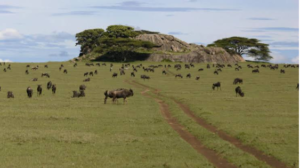
The Seronera area is the heart of the park and the most accessible region. Rivers and permanent water draw animals year-round, so wildlife is reliable in every season.
What it does best:
- Big cats. Lions, leopards, and cheetahs are all regularly seen. Leopards often rest in the branches of sausage trees along the river.
- Year-round viewing. Good game viewing in any month.
- Landscape variety. Rivers, grassland, and rocky outcrops called kopjes.
Things to know: It is the busiest part of the park, and vehicles can gather around popular sightings. A good guide knows quieter spots and the best timing.
Best for: First-time visitors, predator enthusiasts, and travelers who want dependable game viewing at any time of year.
Southern Serengeti and Ndutu
The southern plains and the adjoining Ndutu area are short-grass country, where the herds gather for calving.
What it does best:
- Calving season. Roughly January to March, tens of thousands of wildebeest calves are born over a short period.
- Predator action. Cheetahs, lions, and hyenas concentrate around the newborns.
- Open vistas. Flat plains make animals easy to spot.
Things to know: Conditions change quickly with the rains, and the herds move out of the area as the dry season advances. Ndutu technically lies in the Ngorongoro Conservation Area but forms part of the same ecosystem.
Best for: Travelers who want calving season, newborn animals, and dramatic predator activity.
Western Corridor and Grumeti
The western corridor follows the Grumeti River and offers a different feel, with more trees, floodplains, and riverine habitat.
What it does best:
- Grumeti River crossings. Herds may cross here around June to July, with large crocodiles waiting. Crossings are less predictable than those on the Mara River.
- Birdlife and varied habitat. Woodland and river forest support species not seen on the open plains.
- Adjacent private reserves. Neighboring concessions sometimes allow walking safaris and night drives, which are not permitted inside the national park proper.
Things to know: Timing of the herds in this area varies from year to year, so confirm expectations with your operator.
Best for: Travelers visiting around June and July, birders, and those interested in activities beyond standard game drives.
Northern Serengeti (Kogatende and the Mara River)
The north is remote, scenic, and less crowded, with rolling hills and the famous Mara River.
What it does best:
- Mara River crossings. Generally observed around July to October, when herds gather at the banks and cross in dramatic fashion.
- Fewer vehicles. The north is quieter than the central region.
- Wild landscapes. Open hills, riverine forest, and big skies.
Things to know: Crossings are unpredictable, and animals may linger at the bank for days. Camps in this region fill early for peak months.
Best for: Travelers focused on river crossings and those who prefer quieter areas.
Eastern Serengeti and Lobo
The eastern part of the park, including the Lobo area, is characterized by granite kopjes, scattered woodland, and fewer visitors.
What it does best:
- Resident wildlife. Lions, leopards, and other animals can be found among the rocky outcrops.
- Seasonal herds. The herds often pass through the east in the later part of the year as they move south.
- Solitude. Few vehicles and a relaxed atmosphere.
Best for: Travelers who want a quieter experience and are comfortable with less predictable sightings.
Best Time for a Serengeti Safari
Each period favors a different part of the park.
January to March: Calving season in the south and Ndutu, with intense predator activity.
April to May: Long rains. The park is green, some camps close, and crowds are minimal. The herds are usually moving north through the central and western areas.
June to July: The herds move toward the Grumeti and western corridor, and conditions are generally dry and pleasant.
July to October: Peak season, with herds in the north and river crossings on the Mara. Central Serengeti remains excellent.
November to December: Short rains. The herds move south again, and the landscape turns green with fewer visitors.
The key insight is that you can have a superb Serengeti safari in any month, provided you choose the right region.
How Long Should You Stay?
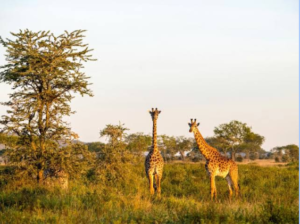
Three nights is the practical minimum for a Serengeti safari, and four to five nights is much better. The park is large, and extra days allow you to explore different areas, follow the herds, and spend longer at rewarding sightings. If your itinerary allows, split your stay between two regions, such as central and north, or central and south, depending on the season.
Getting There and Getting Around
By road. Many travelers drive from Arusha via Lake Manyara and the Ngorongoro highlands, which takes a full day or more. It lets you see more of the countryside, but it is long and can be tiring.
By air. Light aircraft fly from Arusha and other airstrips directly to several Serengeti airstrips, such as Seronera and the northern and southern strips. Flying saves time and is popular with luxury and time-limited travelers, though it adds cost and luggage limits.
Within the park. Game drives are conducted in 4×4 vehicles with pop-up roofs, usually twice a day, with early morning and late afternoon offering the best light and activity.
Activities on a Serengeti Safari
- Game drives: The core of the experience, with morning, afternoon, and sometimes full-day options.
- Hot-air balloon flights: A sunrise flight over the plains, often finished with a bush breakfast, is a highlight for many travelers.
- Walking safaris and night drives: Not generally allowed inside the national park, but available in some neighboring private concessions.
- Cultural visits: Arranged respectfully with nearby communities.
- Photography: Open landscapes and good light make the Serengeti a favorite among photographers.
Where to Stay
Permanent lodges and tented camps offer comfort and stability, with a range of budgets.
Mobile camps move with the seasons, positioning guests in the right region as the herds travel. They offer an immersive, expedition-style experience.
Budget camping options exist for travelers who prioritize cost over comfort.
Choose accommodation based on its location relative to the wildlife you hope to see, not just its facilities. A well-placed camp saves hours of driving each day.
Practical Tips for Your Serengeti Safari
- Book early for peak months, especially camps in the north and near the herds.
- Choose an experienced guide. Guide skill shapes your sightings more than almost anything else.
- Pack for temperature swings. Mornings can be cold, and afternoons warm.
- Bring binoculars and a zoom lens. They improve every sighting.
- Stay flexible. Wildlife does not follow a script.
- Check health and entry requirements. Confirm visa rules, vaccinations, malaria precautions, and any yellow fever certificate requirements.
- Respect the rules. Stay in the vehicle, keep a safe distance, and follow park regulations.
Conclusion
A Serengeti safari is best planned by region, not just by month. The central area offers reliable big cat viewing, the south delivers calving season, the west and north provide river crossings at different times, and the east offers quiet and space. Decide what you most want to see, choose your base accordingly, and give yourself enough nights to enjoy it properly. With an experienced guide, a well-placed camp, and a flexible attitude, the Serengeti will live up to its legend in any season.
Key Takeaways
- The Serengeti covers about 14,750 square kilometers and is a UNESCO World Heritage Site.
- It is divided into distinct regions: central, south and Ndutu, west and Grumeti, north, and east.
- Central Serengeti offers reliable year-round big cat viewing, while the south suits calving season.
- The northern Serengeti is best for Mara River crossings, generally around July to October.
- Three nights is a minimum, and four to five nights is better, ideally split between two regions.
- Walking safaris and night drives are generally available only in neighboring private concessions.
- Choose camps and guides carefully, and book early for peak months.
Frequently Asked Questions
- What is the best time for a Serengeti safari? It depends on what you want. January to March suits calving in the south, July to October suits river crossings in the north, and the central Serengeti is good year-round.
- How many days do I need in the Serengeti? Three nights is a minimum, but four to five nights allows you to explore different regions and enjoy more sightings.
- Which part of the Serengeti is best? It varies. Central Serengeti is reliable year-round, the south suits calving, the north suits river crossings, and the east offers quiet.
- Can I see the Great Migration in the Serengeti? Yes. The herds are always somewhere in the ecosystem, and the location changes through the year, so a good guide and the right camp make a difference.
- Are river crossings guaranteed? No. Crossings are unpredictable, and the herds may wait at the bank for days. Allow several days in the north and stay flexible.
- Can I do a walking safari in the Serengeti? Walking is generally not permitted inside the national park but may be offered in nearby private concessions.
- How do I get to the Serengeti? You can drive from Arusha, which takes a full day or more, or fly to one of the park’s airstrips with a light aircraft.
- Is the Serengeti crowded? Some areas, particularly central Seronera in peak months, can see many vehicles. Quieter regions in the north, east, and west offer more space.
- Do I need vaccinations or malaria medication? Malaria is present in much of Tanzania, and a yellow fever certificate may be required depending on your route. Consult a travel health professional before you travel.
- Can I combine a Serengeti safari with other destinations? Yes. It pairs easily with Ngorongoro Crater, Tarangire, Lake Manyara, Kilimanjaro, and a beach stay in Zanzibar.

